
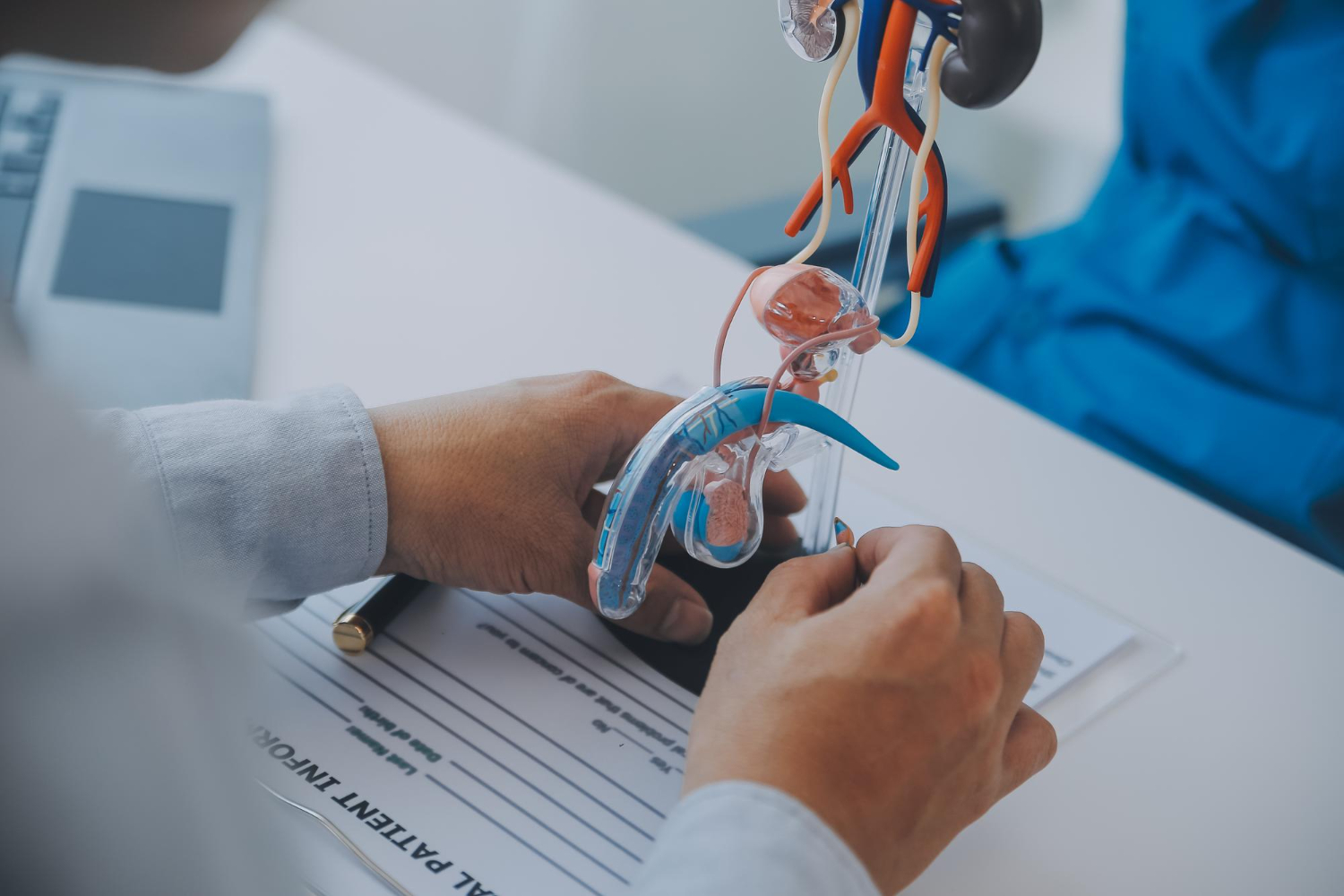
Reconstructive urology focuses on correcting structural problems affecting the urinary tract. These conditions may develop due to injury, previous surgery, infection or other causes. They can interfere with normal urine flow and may lead to discomfort, recurrent infections or difficulty passing urine.
Dr. Akash Shinde has clinical expertise in reconstructive urology, including the surgical management of urethral strictures and complex urethral conditions. His training includes reconstructive procedures such as Buccal Mucosal Graft (BMG) urethroplasty and anastomotic urethroplasty.
The urethra is the tube that carries urine from the bladder to the outside of the body. A urethral stricture occurs when this passage becomes narrowed due to scar tissue.
The narrowing can restrict urine flow and may cause:
Weak or reduced urine stream
Difficulty starting urination
Straining while passing urine
Prolonged urination
Incomplete bladder emptying
Recurrent urinary tract infections
Urinary retention in severe cases
Some strictures may develop following pelvic trauma, infection, catheterization or previous procedures.
The treatment plan begins with understanding the location, length and severity of the narrowing. Assessment may involve:
Detailed medical and surgical history
Physical examination
Urine investigations
Uroflowmetry to assess urine flow
Ultrasound evaluation when indicated
Imaging studies such as retrograde urethrography
Endoscopic assessment in selected cases
The findings help determine the most appropriate reconstructive approach.
Buccal Mucosal Graft (BMG) Urethroplasty
BMG urethroplasty uses tissue taken from the inner lining of the cheek to reconstruct a narrowed section of the urethra. It may be considered for selected complex or longer strictures.
Anastomotic Urethroplasty
This technique involves removing the narrowed segment and reconnecting the healthy ends of the urethra when suitable. Its use depends on the location and length of the stricture.
Reconstruction for Pelvic Trauma-Related Strictures
Some urethral strictures develop following pelvic injuries. These cases require detailed assessment and careful surgical planning based on the extent of the injury.
Not every urethral narrowing requires the same procedure. The choice of treatment depends on previous interventions, scar tissue, stricture characteristics and the patient’s overall health.
Dr. Akash Shinde focuses on appropriate evaluation and reconstructive surgical planning to address the underlying structural problem.
Persistent weak urine flow, repeated urinary infections, difficulty passing urine or a history of pelvic trauma should be assessed by a urologist.
Consult Dr. Akash Shinde for specialized evaluation and reconstructive treatment options for urethral strictures and urinary tract conditions.
Book your consultation today and take the next step toward better health.